
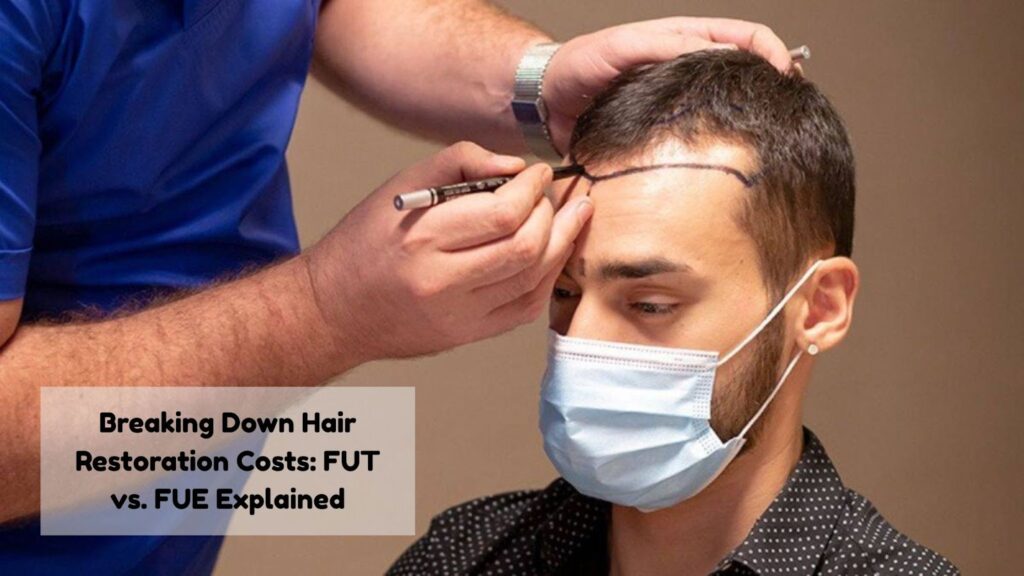
Millions of men and women worldwide are affected by the widespread problem of hair loss. For many, hair restoration surgery has become the most reliable solution to regain a natural and youthful hairline. Among the most common techniques available today are FUT (Follicular Unit Transplant) and FUE (Follicular Unit Extraction). The total cost of hair restoration is frequently one of the main factors influencing patients’ decisions between the two strategies, which both have advantages and disadvantages. This article breaks down the pricing structures of FUT and FUE, while also helping you understand the hidden elements that can influence the total investment.
Understanding Hair Restoration Costs
Table of Contents
Before comparing FUT and FUE, it’s important to understand the general factors that influence the total hair restoration cost. These include:
- Clinic location: The location of the procedure—whether it’s in a major metropolitan area with high demand or in a smaller town—can have a big impact on the price.
- Surgeon’s expertise: Highly experienced surgeons with strong track records often charge more for their services.
- Number of grafts: The total amount of transplanted follicles directly affects cost.
- Technology and tools: Clinics using advanced robotic systems or enhanced extraction methods may have higher fees.
When evaluating these factors, it’s essential for patients to focus on value rather than price alone. A well-done procedure ensures long-lasting, natural-looking results, while a low-cost surgery performed by an inexperienced surgeon could lead to complications and additional expenses.
What is FUT?
Follicular Unit Transplant (FUT), often called “strip surgery,” is a traditional method in which a strip of scalp is removed from the back of the head. From this strip, individual follicular units are dissected and implanted into balding areas.
- Advantages: Generally speaking, FUT permits the transplantation of more grafts in a single session, making it a great choice for individuals who need a lot of coverage. On a per-graft basis, it is also typically a little less expensive.
- Drawbacks: The main disadvantages are the linear scar left at the donor site and a longer recovery time compared to FUE.
- Typical Costs: The cost of FUT varies between $4,000 and $10,000 on average, depending on the length of the session and the location of the clinic.
What is FUE?
Follicular Unit Extraction (FUE) is a more modern method that involves removing individual follicular units directly from the scalp using a specialized punch device.
- Advantages: FUE is minimally invasive, leaves no linear scar, and generally offers quicker recovery times. It is also the preferred option for patients who want to keep their hair very short.
- Drawbacks: Because each follicle is extracted individually, the process is more time-consuming and often more expensive.
- Typical Costs: FUE procedures usually range between $5,000 and $20,000, depending on the number of grafts and the clinic’s reputation.
Cost Comparison: FUT vs. FUE
When comparing the two methods, FUT is typically less expensive because it is less labor-intensive. FUE, on the other hand, requires precision and advanced tools, which contributes to higher costs.
- FUT average per graft cost: $4 – $8.
- FUE average per graft cost: $8 – $10
For example, a patient requiring 2,000 grafts might pay $8,000–$16,000 for FUT but $16,000–$20,000 for FUE. While FUT may save money upfront, FUE provides advantages in aesthetics and recovery that some patients feel justify the added expense.
Other Cost Factors Patients Should Consider
Beyond the base price of FUT or FUE, patients must also account for additional fees:
- Consultation fees: Initial evaluations can range from $100–$300, though some clinics apply this cost toward the procedure if you move forward.
- Medications and anesthesia: Antibiotics, painkillers, and local anesthesia may add to the total bill.
- Post-surgery care: Follow-up visits, special shampoos, and treatments designed to promote healing can increase expenses.
- Hidden costs: Travel, accommodations, and time off work should also be factored into the overall budget.
Which Technique is More Cost-Effective?
Determining which method is more cost-effective depends on the patient’s individual goals and hair loss severity.
- Generally speaking, FUT is more affordable and suited for patients who require a large number of grafts in a single appointment.
- FUE is ideal for patients who want minimal scarring, faster recovery, and flexibility in hairstyle, even though it costs more.
Ultimately, the best approach is to weigh the long-term benefits. Many patients consider FUE worth the higher investment due to its natural appearance and advanced healing process.
Tips for Managing Hair Restoration Costs
If you are considering surgery, there are ways to manage your expenses without compromising quality:
- Research multiple clinics and compare not just pricing but also reviews and results.
- Understand graft-based pricing so you know how clinics calculate the total fee.
- Ask about financing plans to spread the cost over manageable installments.
- Evaluate surgeon experience over choosing the cheapest option.
- Factor in travel and recovery costs before committing.
Conclusion
Both FUT and FUE are proven methods for restoring hair, and while each comes with a different price tag, the most important factor is the quality of results. A well-executed procedure can last a lifetime, making the investment worthwhile. By carefully comparing options, understanding additional fees, and selecting an experienced surgeon, patients can make informed decisions about their treatment.
Ultimately, concentrating on the worth of a hair restoration procedure that is secure, efficient, and looks natural will help people see the cost not only as an expense but also as a long-term investment in their confidence and self-image.=

