
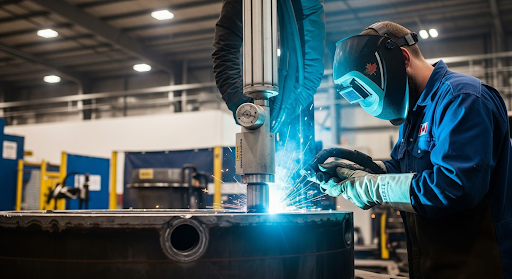
Whether we say construction, transportation, manufacturing, or infrastructure development, welding can be seen as an important factor in many industries. Joining metal components in everything from buildings and bridges to vehicles and machinery, ensuring structural integrity and durability is an important aspect, but it must be done with the right process.
As much as welding is seen as a necessary aspect, sustainability is also important, which is why industries are moving towards more sustainable processes, including sustainable welding. It helps minimise the environmental impact of manufacturing, reduces costs, and improves working conditions. By adopting eco-friendly materials, energy-efficient techniques, and minimising waste, industries can reduce their carbon footprint and promote a more circular economy.
Sustainable Welding Practices: A Broad Look Towards the Future
Table of Contents
Several practices have been performed till now, and it is still evolving to get the most out of it. Here are some sustainable practices in welding that are being adopted by the industries in Canada:
-
Energy Efficiency
As compared to traditional methods, modern and advanced welding techniques are more efficient and provide more productivity. Inverter-based welding machines offer greater energy efficiency and require less power to operate. You will get flexibility and energy savings from these modern approaches.
Reduce heat input, minimise distortion and improve welding speeds. You can get welding machines that promote different capabilities and optimise energy efficiency.
-
Material Efficiency
Material efficiency is also one of the biggest factors that needs to be considered while welding. Selecting the right materials and optimising their use can significantly impact the overall strength, durability, and cost-effectiveness of a welding project. Incompatible materials or inefficient welding techniques can lead to defects, reduced joint strength, and increased costs.
Welding wire with higher deposition rates can help minimise material waste. Choose wires that can provide higher efficiency with less spatter. You can promote precise material usage, reduced over-welding and waste with robotic welding systems and laser welding technologies.
-
Waste Reduction
You can reduce material waste by implementing digital welding solutions and precision techniques. These can help with remote sustainable welding in your industry. Technologies minimise excess waste and scrap so that you can think green and promote green.
Ensure materials are utilised efficiently and your digital planning tools are helping in pre-determining the exact requirements for a project to reduce over-welding and waste of resources.
Ensure productivity and control over the flow of the welding process with the use of an electric welding regulator. The combination of supply and distribution of gas flow based on welding current, surge suppression, and a quick responding valve for shut off enables you to achieve a large-scale reduction in gas usage.
Future extraction systems can improve environmental air quality by removing pollution caused by welding fumes. You can see that evolving technological changes are going to rule over the traditional, lengthy, and less productive methods.
-
Eco-friendly Welding
Using materials like PVC-free welding fabrics, water-based fluxes, and alternative electrode coatings can significantly reduce harmful fumes and waste. Innovative processes can minimise the number of passes needed, leading to fewer emissions. Techniques like friction stir welding (FSW) and magnetic pulse welding (MPW) eliminate the need for filler materials and flux, minimising fumes and waste.
These can not just help environmental benefits but also take care of welders. The fewer harmful fumes will help reduce the welder’s health concerns.
-
Training and Education
Training and education are crucial for sustainable welding practices as they equip welders with the knowledge and skills to minimise environmental impact, improve efficiency, and enhance safety, ultimately contributing to a more sustainable industry.
When your welders are trained and educated about the equipment and their work, they will provide better outcomes, and their safety will also be guaranteed. Training can teach welders how to choose the most energy-efficient welding processes and techniques, reducing energy consumption and waste.
Education on proper material selection and usage can minimise waste and reduce the need for resource extraction and processing. Understanding sustainable welding techniques, such as solid-state welding and energy-efficient systems, can significantly reduce the environmental footprint of welding operations.
Proper training minimises errors, reducing the need for costly rework and material waste, leading to cost savings. Training can streamline welding processes, improving productivity and throughput.
Training on safety procedures and personal protective equipment (PPE) minimises the risk of accidents and injuries associated with welding. Educating welders about potential hazards, such as arc radiation and fumes, ensures they take appropriate precautions.
Now we know why all these are essential and how Canadian companies or industries can make the best out of these. Look for welding services in Hamilton for more informed decision-making.

