
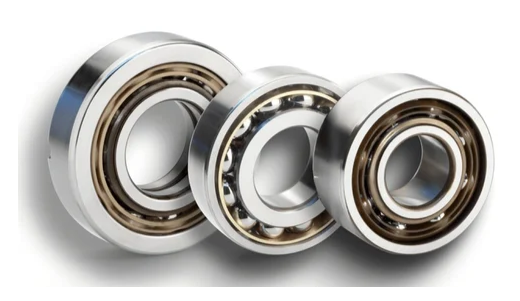
Taper roller bearings are essential components of heavy machinery, transportation systems, agricultural and other off-road machinery parts in addition to plant equipment like presses or mills of various types. Because of the balance and strength of the two races, in or axial design has become one best rotation bearings on our market today. For every Taper Roller Bearing India manufacturer, steel quality becomes a critical factor. However, the life and performance of a taper roller bearing rest on first-class steel. Can a bad bearing withstand continuous damage and then be as good as new?
Importance of Steel Grade and Heat-Treatment in Taper Roller Bearings
Table of Contents
Why two factors of steel and heat-treatment affect performance and service life for taper roller bearings. Precision is a requirement of modern bearing steel, not just in terms of gear drawing but also gear making equipment.
Heat treatment is an important factor in the performance of bearing steel. Drawing on the technical of recent decades it’s apparent that heat treatments performed on low carbon or high alloy bearing steels impact a material’s overall toughness, fatigue strength, and wear resistance. Hardenability, a property that determines whether a steel can be heat-treated to attain specified properties, is another significant factor in the performance of bearing steel. The life and performance of a taper roller bearing are very much decided by these two points: a very high-grade carbon-steel is used and the heat treatment that gets done during its production is accurate enough that it can work for thousands of hours without breaking down. If wrong choices are made in either case, then the best result goes.
Many Taper Roller Bearing India manufacturers who aim to produce stepper roller bearings capable of withstanding constant pressure, resisting wear, and delivering long-lasting, reliable performance must pay close attention to material selection. While bearing rings are traditionally made from low-carbon steels may not always provide the optimal durability required for demanding industrial conditions. To ensure superior load-bearing capacity, extended service life, and efficient operation, manufacturers should focus on advanced alloy compositions and precision engineering techniques that enhance hardness, wear resistance, and structural stability.
The Cleaning and Heat-Treatment of High-Alloy Bearing Steels
Today, because of the extremely high demands on railway bearings, there are still great numbers which have become inactivated. Reduced dimensions and higher speeds have has made cryogenically treated stainless steels another choice for those manufacturers wishing to meet even more exacting demands from their customers.
Many high-quality steel products are further processed for primacy cleaning, or subjected to vacuum degassing so that various harmful impurities, including oxygen and sulphur, may be removed. This increases the anti-fatigue performance of bearing working and prolongs its service life.
Why Heat-Treatment Is Important
No matter how good the steel if not properly heat-treated, it cannot release its full performance. Heat-treatment both strengthens the internal grain structure of steel and gives it the right combination of hardness and toughness. A bearing from the conical roller kind must maintain a hard but elastic inner core, with at the same time a very hard surface capable of bearing up under constant rolling impact.
This ensures that the working surface remains hard and wear-resistant, while the inner material has enough toughness not to fracture under a sudden shock load.
Heat-Treatment Processes Used in Bearings
- The choice of heat-treatment method depends on the type of steel and performance requirements.
- Annealing
- This is a preliminary treatment aimed at softening the steel, reducing internal stress and improving machining properties.
- Through Hardening (Quenching and Tempering)
- The steel is heated and then cooled rapidly to produce uniform hardness throughout its cross-section; this is followed by tempering to give the right balance between strength and toughness. This method is suitable for heavily loaded bearings.
Case Hardening or Carburizing
Carbon is introduced into the surface layer to give a hard outer shell, while the core remains tough and vibration-resistant. This method is good in instances where there may be vibration or impact.
Induction Hardening
Specific parts of the work are differentially hardened, such as the raceways. The result is a product with strong surface properties while maintaining internal strength.
Tempering
This is performed after quenching to reduce brittleness and increase fatigue strength. The aim is to give a fine and uniform microscopic structure, generally martensitic with controlled hardness suitable for the application.
Surface Hardness and Microstructure
The hardness level must reach high levels in taper bearing raceways and rollers, and to achieve this there is a need often for hardness within the range of 58 to 64 HRC (Rockwell hardness), depending on application conditions. This hardness is essential to resistance rolling fatigue and wear. At the same time, interior toughness resists fracture under shock loads.
Improper heating or insufficient quenching can cause soft spots, and cracking, all of which reduce bearing life.
Influence on Bearing Performance
The correct steel grade and heat treatment can give a bearing several advantages in performance:
- Higher load-carrying capacity
- Greater resistance to spalling, pitting, and flaking
- Over all shock absorption
- The risk of failure under dynamic stress is decreased, keeping machine lifelong with minimum need for service work.
Poor heat treatment practices or use of inferior grade steel frequently results in cracking, noise and premature wear that just doesn’t seem right. Such problems mean downtime for machines, they create safety hazards, and they can also increase maintenance costs.
Quality Testing and Standards
High-precision bearings undergo very rigorous quality checks. These include hardness testing, microstructure inspection and dimension measurement as well as fatigue tests. Non-destructive test methods are also employed to find internal defects without causing damage to the work piece
Reputed companies follow international materials and heat-treat standards so as to ensure their products maintain consistent performance under the stress of industrial operations
Why This Knowledge Matters to Buyers
A clear perception of steel and heat treatment will let buyers evaluate bearing quality and avoid buying low- grade products. It assists in getting the right bearings for heavy machinery, so avoiding downtime and prolonging machine life. Specifications for buyer review include steel grade, hardness level, heat treatment method and certification of conformance.

